OEM Parts for Collision Repair in Sunnyvale
Factory-Quality Parts
In Sunnyvale, drivers face a common choice after a collision: accept the aftermarket parts their insurance company recommends or fight for OEM factory parts.
This page walks you through OEM parts for collision repair, the differences between OEM, aftermarket (certified & uncertified), used, and reconditioned parts, and how we excel at getting dealerships to price match so you receive OEM parts at costs insurance companies will approve.
Most collision repairs using OEM parts take the same 3 days as aftermarket parts, with no difference in repair timelines.
We offer same-day estimates that compare OEM versus aftermarket parts so you can understand the quality, fit, and cost differences before making any decisions.
We’re a Diamond Certified collision repair shop with over 1,000 5-star reviews that’s completed over 30,000 repairs, and we include a FREE $289 interior and clay bar wax exterior detail. We’re the best at getting dealerships to price match OEM parts for insurance jobs backed by our lifetime workmanship warranty.




What Are OEM Parts for Collision Repair?
OEM stands for Original Equipment Manufacturer, which means the parts are made by the same company that built your vehicle.
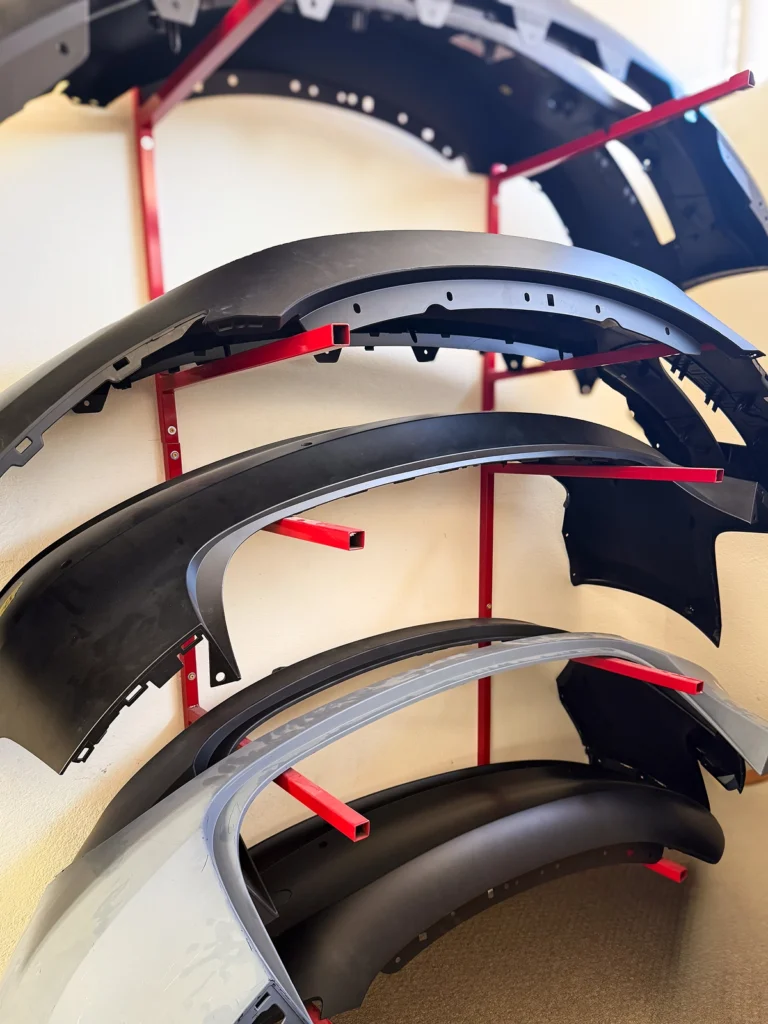
OEM parts match the original parts installed on your car when it was new, using the same manufacturing process, materials, and quality standards.
When you buy a Toyota, Honda, Tesla, or any other vehicle, every part on that car is an OEM part from the manufacturer.
Why OEM Parts Matter for Collision Repair
OEM parts offer guaranteed fit, finish, and performance because they’re made to the exact specifications your vehicle was designed with.
Key advantages of OEM parts:
Perfect fit with no gaps, alignment issues, or modification required
Same materials and construction as original parts
Manufacturer warranty coverage (typically 12
months to 3 years)Maintained resale value and vehicle integrity
No guesswork on quality or safety performance
OEM Parts Cost More But Offer Certainty
OEM parts typically cost 30% more than aftermarket alternatives because they’re manufactured to stricter quality standards.
However, the increased cost buys you certainty in fit, finish, durability, and safety performance.
Many drivers prefer OEM parts for newer vehicles, luxury cars, or vehicles they plan to keep long-term because the quality difference is noticeable.
OEM vs Aftermarket vs Used vs Reconditioned Parts
Understanding the differences between OEM, aftermarket, used, and reconditioned parts helps you make informed decisions about collision repair quality and cost.
Each type has trade-offs in availability, cost, fit, and long-term performance.
OEM Parts (Original Equipment Manufacturer)
OEM parts are manufactured by the company that built your vehicle using the same specs, materials, and processes as the original parts.
Pros:
Perfect fit with no gaps or alignment issues
Same quality and materials as original parts
Manufacturer warranty included
(12 months to 3 years)
Maintains vehicle resale value
No quality guesswork
Cons:
Cost 30% more than aftermarket alternatives
Sometimes on backorder
Certified Aftermarket Parts (CAPA, NSF Certified)
Certified aftermarket parts are made by third-party manufacturers and tested by independent organizations like CAPA or NSF to meet OEM quality standards.
Pros:
Perfect fit with no gaps or alignment issues
Quality-tested to attempt to meet OEM specifications
More availability and vendors
Cons:
Only 1 in 4 aftermarket parts actually meet OEM standards according to CAPA studies
No manufacturer warranty (warranty is through the wholesale vendor that sold the part)
Fitment can vary even with certification
May affect resale value perception
It should be noted that some aftermarket parts are never even attempted to be certified, like brackets, handles, and mirrors. Certification typically focuses on major parts like headlights, taillights, fenders, and bumpers.
Uncertified Aftermarket Parts
Uncertified aftermarket parts have no independent testing or quality verification and represent the bulk of aftermarket options.
Pros:
Lowest cost option (40% less than OEM)
Very wide availability
Cons:
No quality control or performance standards
Fit issues are common (gaps, misalignment, modifications needed)
No warranty in most cases
Unknown materials and durability
Can fail safety testing
May hurt resale value
Used/Recycled Parts (LKQ - Like Kind and Quality)
Used parts are recycled and fully restored that come from another vehicle that was in use.
It’s important to note here that the part is still an OEM-manufactured part.
Pros:
Lower cost than new OEM parts
OEM quality if from same make/model/year
Environmentally friendly option
Cons:
Availability and minimal warranties offered by recycled vendor
Reconditioned Parts
Reconditioned parts are damaged OEM or aftermarket parts that have been repaired and refinished.
Pros:
Lower cost than new OEM (savings of about 15% to 25% from OEM)
Can be good quality if properly reconditioned
Cons:
Quality depends on reconditioning process
Limited warranty
Why Insurance Companies Push Aftermarket Parts
Insurance Companies Consider Aftermarket "Equal" to OEM
Most insurance companies take the official position that aftermarket parts are equal in quality, fit, and performance to OEM parts.
They cite studies by the Insurance Institute for Highway Safety (IIHS) that show some aftermarket parts perform as well as OEM parts in crash testing.
However, independent testing by the Certified Automotive Parts Association (CAPA) reveals that only 1 in 4 aftermarket parts actually meet OEM standards.
The insurance industry benefits from treating all aftermarket parts as equal to OEM, even though quality varies widely between certified and uncertified aftermarket options.
Insurance Companies Are Only Required to Replace with "Like Kind and Quality"
Insurance companies are only required to replace with “like kind and quality” parts per California Department of Insurance standards.
This means your insurance company can approve aftermarket parts that are considered equivalent in quality to OEM, even if you prefer factory parts.
If you want OEM parts over the aftermarket parts on your insurance estimate, you may have to pay the cost difference out of pocket.
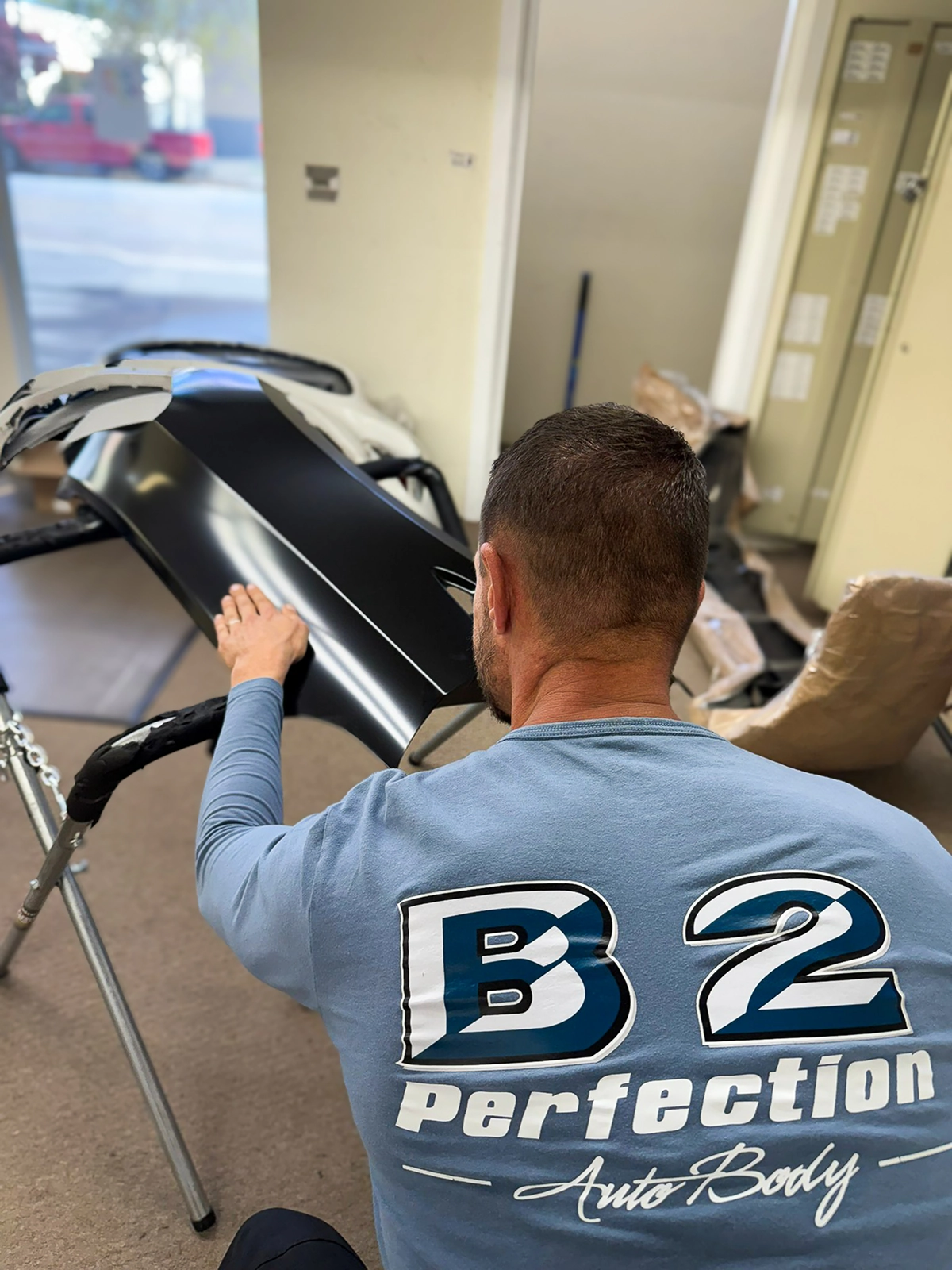
This is where our dealership price-matching expertise makes a difference. We often get dealerships to sell us OEM parts at the insurance approved aftermarket prices. We just need to provide the relevant claim documentation.
Common welded panels include:
Quarter panels – the rear side body panels behind the rear doors (often mistakenly called fenders)
Roof panels – the top of the vehicle
Pillars – the vertical pillars that you see when the doors are open (A-pillar by windshield, B-pillar between front and rear doors, C-pillar is what the rear door closes onto)
Rockers – the panels running along the bottom of the car, where your feet might hit as you get in and out of the car
Welded or bonded panel replacement typically takes 7 to 14+ days.
Welded or bonded panel replacement takes much longer because technicians must carefully cut away the damaged panel and weld in the new panel using
OEM-approved welds such as the common spot weld or MIG weld techniques or bond them with OEM-approved glues. Then they apply various corrosion protections such as cavity wax to prevent future rust, and paint and often blend adjacent panels.
Welded and/or bonded panels always cost more due to the increased labor time, precision welding, and factory corrosion protection procedures required.
How OEM Parts Price Matching Works
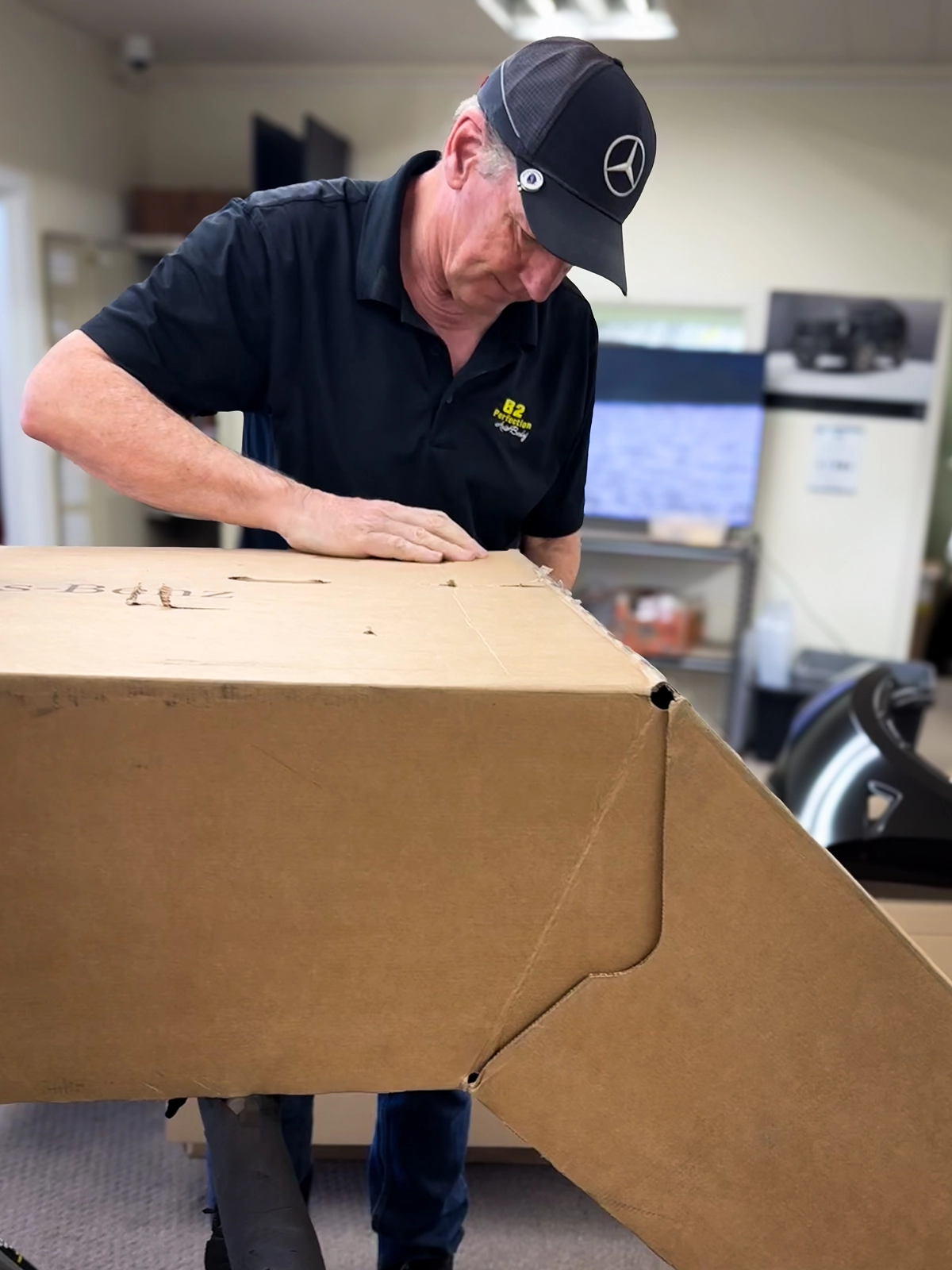
Getting OEM parts approved by insurance companies at aftermarket prices is our specialty, and we’ve perfected the dealership price-matching process over 20 years.
Most drivers don’t know that dealerships will price match OEM parts to stay competitive when insurance claims are involved.
The Price-Matching Process
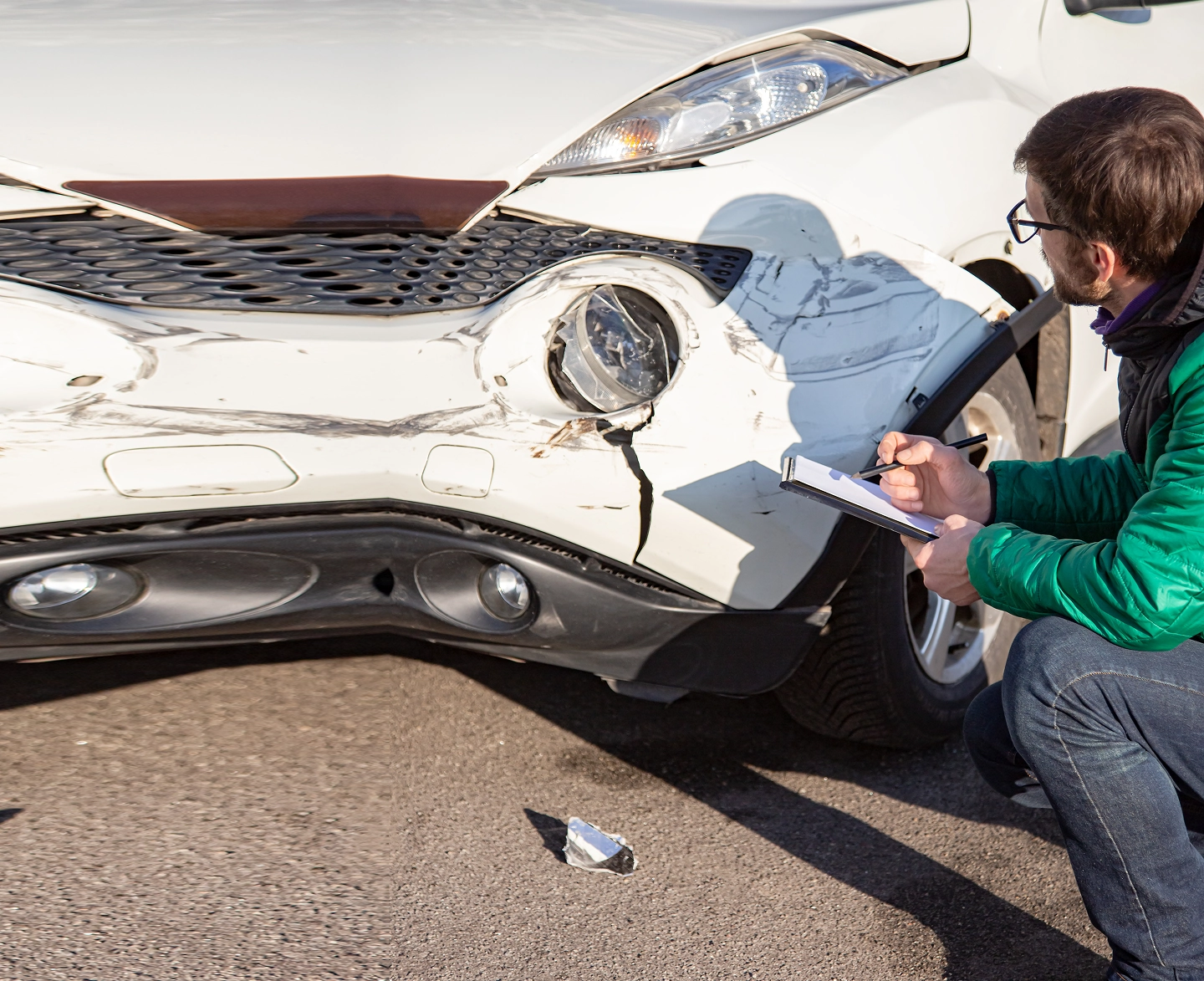
When your insurance estimate includes aftermarket parts, we contact local dealerships with the aftermarket part prices and ask them to match those prices for genuine OEM parts.
We provide the relevant claim documentation to the dealership, which shows the insurance-approved aftermarket pricing.
In most cases, dealerships will price match the aftermarket price, as long as the insurance company didn’t put too cheap of a part on their estimate.
We’ve built strong relationships with local Toyota, Honda, Ford, Tesla, and other dealerships in Sunnyvale, Mountain View, Santa Clara, and surrounding areas, so we handle all the negotiation, coordination, and delivery on your behalf.
Why Dealerships Agree to Price Match
Dealerships have several reasons to match aftermarket prices for collision repair parts:
They maintain relationships with local body shops for ongoing business
Selling OEM parts at lower margins is better than no sale at all
They want to keep customers in the OEM parts ecosystem
Competition from aftermarket vendors forces them to stay competitive
Insurance claims represent volume business with consistent orders
Success Rate and Results
We are the best in the South Bay and successfully get dealership price matching on OEM parts in about 95% of insurance claims.
Our price-matching expertise means you’re far more likely to get OEM parts installed on your vehicle without fighting with your insurance company or paying extra out of pocket.
Frequently Asked Questions About OEM Parts for Collision Repair in Sunnyvale
OEM stands for Original Equipment Manufacturer, which means the parts are made by the same company that built your vehicle. OEM parts match the original parts installed on your car when it was new, using the same manufacturing process, materials, and quality standards. OEM parts offer perfect fit, same quality as original parts, manufacturer warranty coverage, maintained resale value, and no guesswork on quality or safety performance. They typically cost 30% more than aftermarket alternatives.
Insurance companies save 30% of the part costs by approving aftermarket parts instead of OEM parts, which reduces their costs and helps lower insurance premiums. Most insurance companies take the official position that aftermarket parts are equal to OEM parts, even though independent testing shows only 1 in 4 aftermarket parts meet OEM standards. Some insurance companies offer OEM parts endorsements that guarantee factory parts for an additional premium. Companies that offer this endorsement include Farmers, Nationwide, Allstate, USAA, and Liberty Mutual.
OEM parts offer perfect fit, manufacturer warranty, and maintained resale value but cost around 30% more and sometimes can rarely be on backorder. Certified aftermarket parts cost about 30% less with more vendor availability, but only 1 in 4 meet OEM standards and fitment varies. Uncertified aftermarket parts are around 40% cheaper with wide availability but have no quality control and common fit issues. Used/recycled parts are still OEM-manufactured and environmentally friendly but have availability issues and minimal warranties. Each option trades cost for certainty in quality and fit.
Aftermarket parts are replacement parts made by third-party manufacturers instead of the original vehicle manufacturer. They’re designed to fit your vehicle but aren’t made by the company that built your car. Certified aftermarket parts are tested by organizations like CAPA or NSF to attempt to meet OEM specifications, while uncertified aftermarket parts have no quality testing. Studies show only 1 in 4 aftermarket parts actually meet OEM standards, and fitment issues like gaps and misalignment are common.
When your insurance estimate includes aftermarket parts, we contact local dealerships with those aftermarket prices and ask them to match those prices for genuine OEM parts. We provide the relevant claim documentation to the dealership, and in most cases, dealerships will price match the aftermarket price as long as the insurance company didn’t put too cheap of a part on their estimate. We’ve built strong relationships with Toyota, Honda, Ford, Tesla, and other dealerships in Sunnyvale and surrounding areas. We successfully get dealership price matching on OEM parts in about 95% of insurance claims.
You can request OEM parts for your collision repair but they are almost never granted. Your insurance company is not required to pay for them unless you have an OEM parts endorsement on the policy. Insurance companies are only required to replace with “like kind and quality” parts per California Department of Insurance standards, which allows them to approve aftermarket and used parts. However, our dealership price-matching expertise often gets OEM parts approved at aftermarket prices, so you receive factory parts without paying out-of-pocket or having to fight with the insurance.










We Serve Mountain View, Santa Clara, and Silicon Valley Communities
We’re located in Sunnyvale on Wolfe and Kifer, next to Taco Bell and Apple (Wolfe Campus), and serve drivers throughout Silicon Valley.
Most customers reach us in about 15 minutes using Highway 101, El Camino Real, and Central Expressway.
Sunnyvale
Los Altos
Mountain View
Saratoga
Santa Clara
Campbell
Cupertino
Milpitas
San Jose
We offer free pick-up and drop-off so your collision repair with OEM parts stays convenient no matter where you’re coming from.
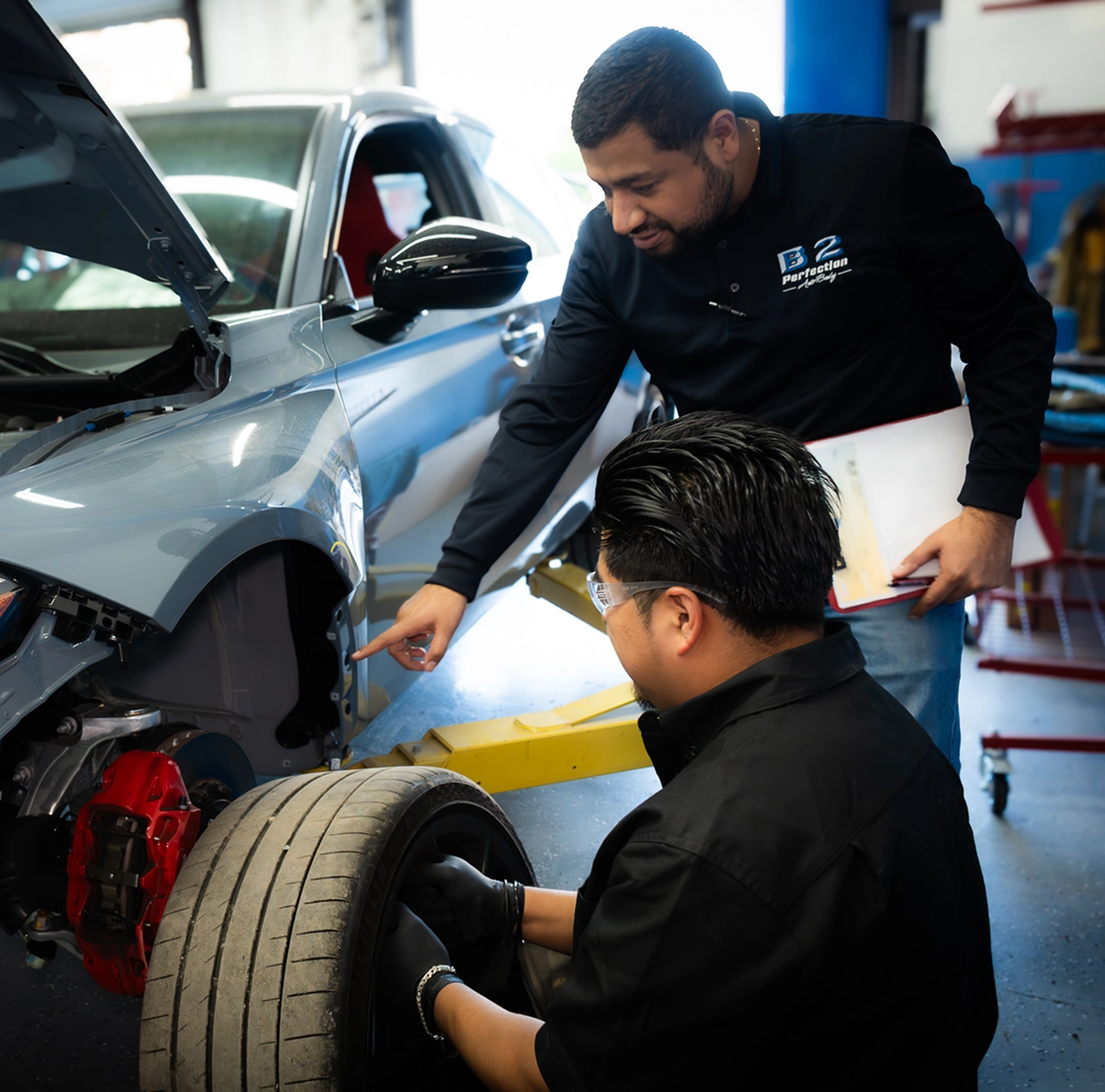
Whether you’re dealing with collision damage from an accident near Levi’s Stadium in Santa Clara or body panel damage from commuting through San Jose, we handle collision repair with OEM parts, dealership price matching, and insurance negotiation backed by a lifetime warranty.
What our client’s are saying
3 Iron Clad Guarantees
Lifetime Workmanship Guarantee
Own it? Lifetime repair warranty.
Lease it? Guaranteed clean lease return or we fix it freeFlawless Finish Guarantee
If the paint match isn’t correct, we fix it free
Claim Vs Out-of-Pocket Guarantee
We help you decide claim vs. out-of-pocket, or escalate it to a insurance-experienced manager
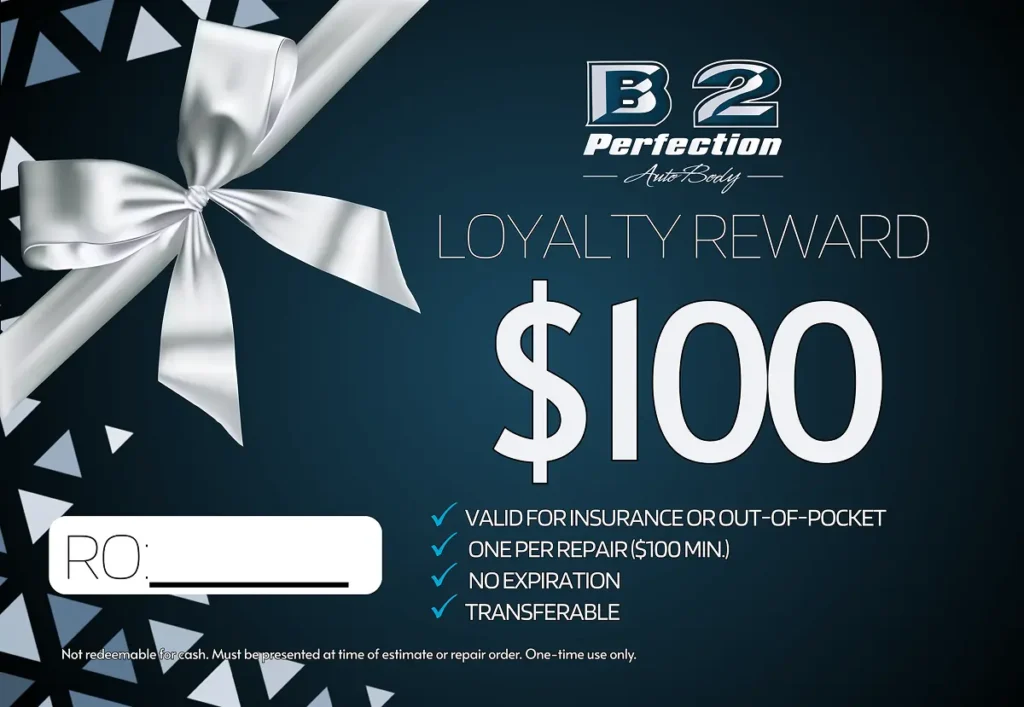
Every Lifetime Guarantee Repair Comes With a $100 Reward For Future Repairs!
Customer Pay Repairs
20% Off Labor For Out-of-Pocket Repairs
Limited Time Offer
Offer ends:
Get high-quality repairs done right the first time. Claim your savings today and enjoy a smooth, hassle-free repair from start to finish.
Come Visit Us