Body Panel Repair in Sunnyvale
Expert Metal Work for Doors, Fenders, and Quarter Panels
In Sunnyvale, body panel damage from collisions, parking incidents, and side-swipes happens daily on Highway 237 and local streets.
This page walks you through body panel repair and replacement, the differences between steel and aluminum panels, and when repair makes sense versus full replacement.
Most panel repairs finish in 3 to 5 days, and we offer same-day estimates so you can decide fast.
We’re a Diamond Certified collision repair shop with over 1,000 5-star reviews that’s completed over 30,000 repairs, and we include a FREE $289 interior and clay bar wax exterior detail restoring and replacing body panels with OEM-quality metalwork backed by our lifetime workmanship warranty.





Most Body Panels Can Be Repaired Without Full Replacement
If you have a dented door, crumpled fender, or damaged quarter panel from a collision or parking mishap, repair often saves you money and time compared to ordering and installing a new panel.
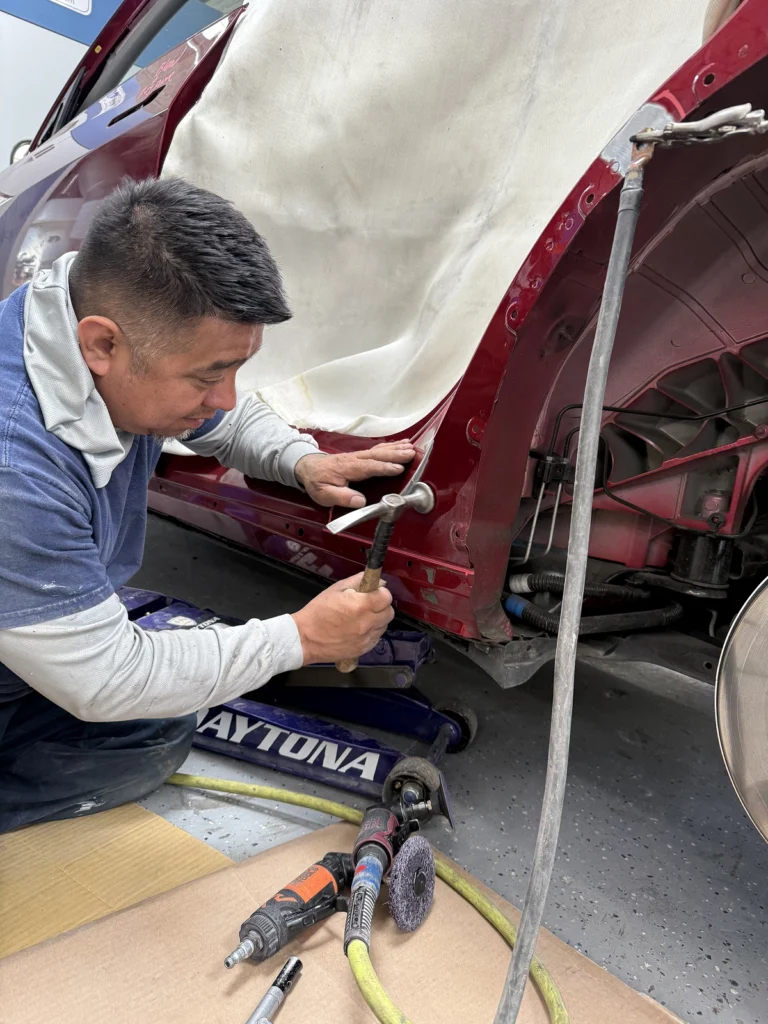
We evaluate the damage and walk you through both options so you understand what works best for your situation.
Here's what determines repair versus replacement:
Material type (mild steel, high-strength steel, ultra-high-strength steel, or aluminum)
Severity of the damage (dent depth, metal stretch, tears, or kinks)
Access to the backside of the panel for metalwork
Contour complexity and body lines
Silicon Valley’s crowded parking lots, like the In-N-Out on E El Camino Real, cause frequent door dings and fender damage that’s perfect for repair. The intersection of Mathilda Avenue and Maude Avenue, Sunnyvale’s #1 collision intersection in their most recent report, sees higher rates of side-impact and panel damage.
(City of Sunnyvale. Roadway Safety Plan. City of
Sunnyvale, 29 Sept. 2020.)
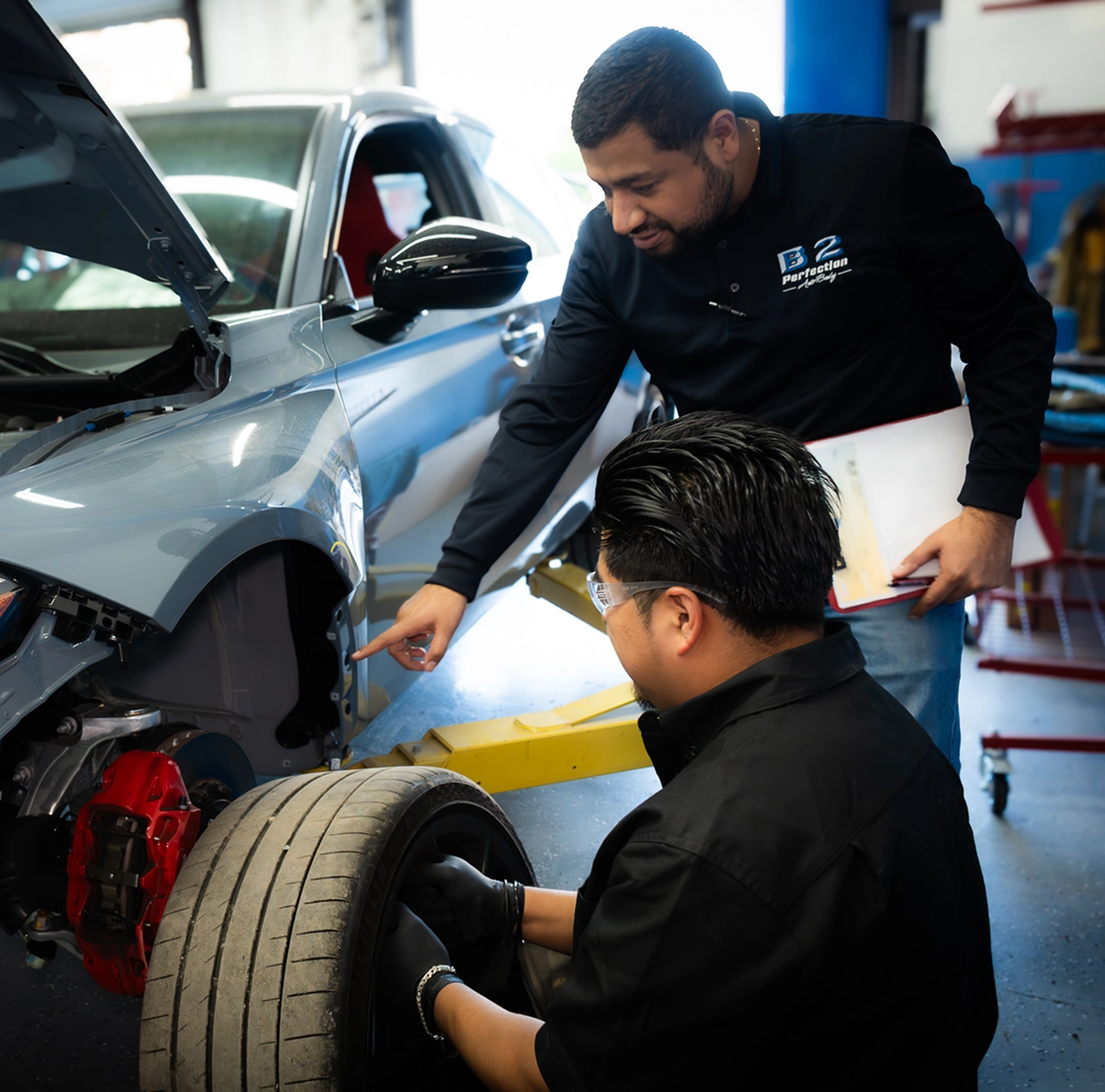
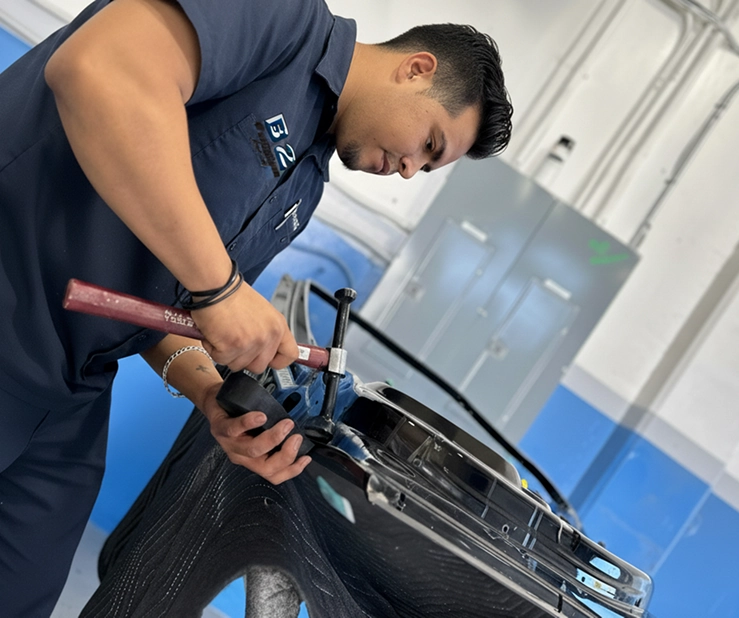
Our technicians use hammer-and-dolly techniques, dent pullers, and controlled metal shrinking to restore panels to OEM contours without replacement when possible.
Different materials affect what kind of repairs can be completed, so we assess the material type and damage severity before recommending the best path forward.
How Body Panel Repair Works
(Material by Material)
Body panel repair depends on what the panel is made of because different metals react differently to impact and repair methods.
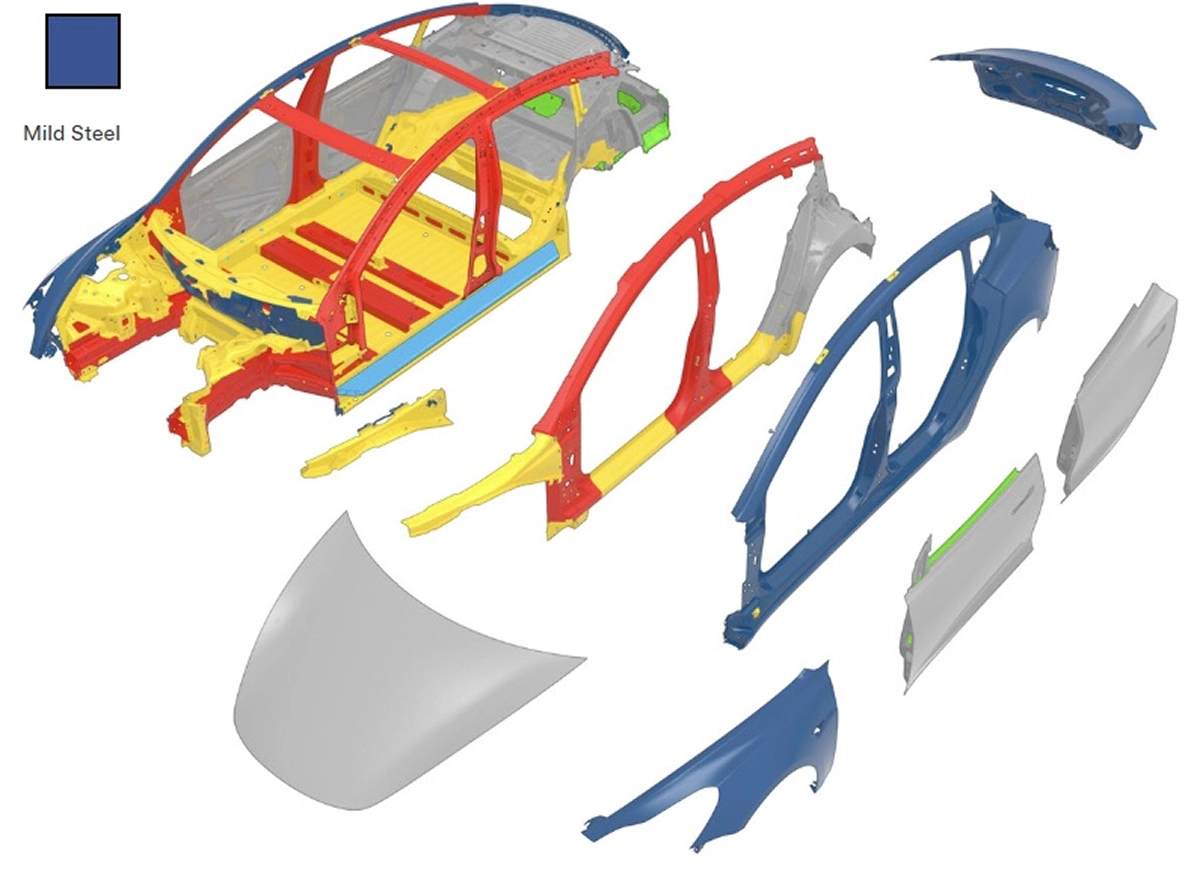
Mild Steel
Mild steel is the most common metal on vehicles and has great memory, meaning it can often be returned to its original contour.
Technicians use hammer-on-dolly, hammer-off-dolly, pull tabs, stud welding, and metal finishing to reshape mild steel panels. Panels must then have corrosion protection applied (cavity wax being an example).
Light heat can be applied for shrinking when metal is overstretched, but only within OEM guidelines.
High-Strength Steel (HSS)
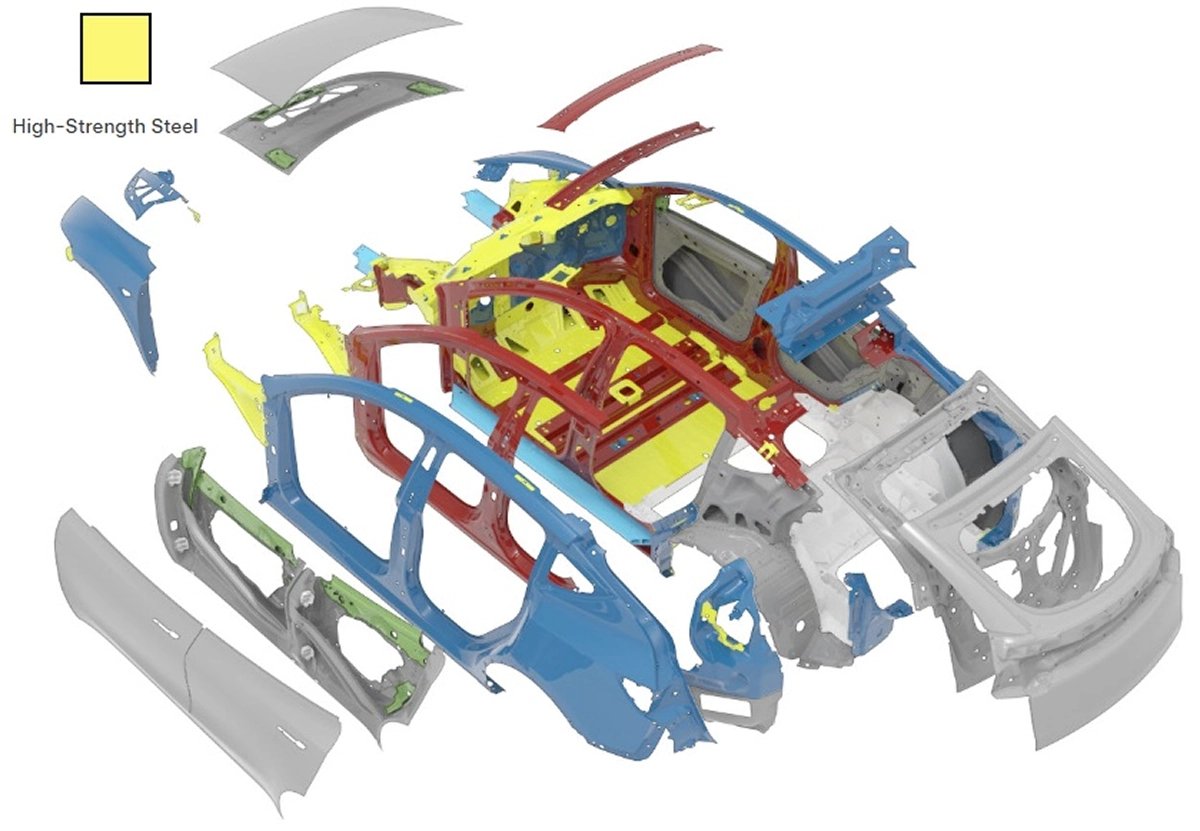
High-strength steel is stronger and often thinner than mild steel, but it has poor contour memory and stays stretched after impact.
HSS almost always cannot be heated because heat destroys its strength, though some lower tensile strength high-strength steel can be heated if the manufacturer allows for it.
Repairs focus on controlled pulling and reshaping, and overstretched or kinked HSS usually requires replacement.
Ultra-High-Strength Steel (UHSS)
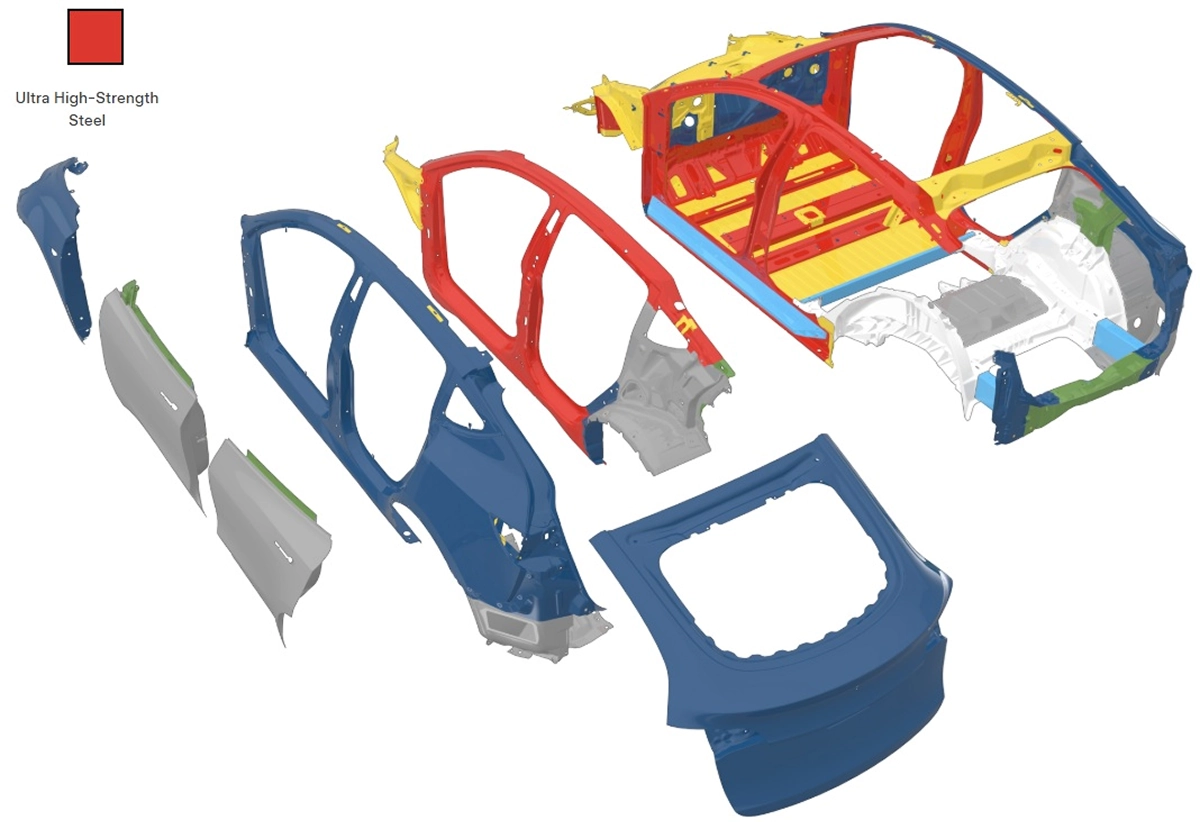
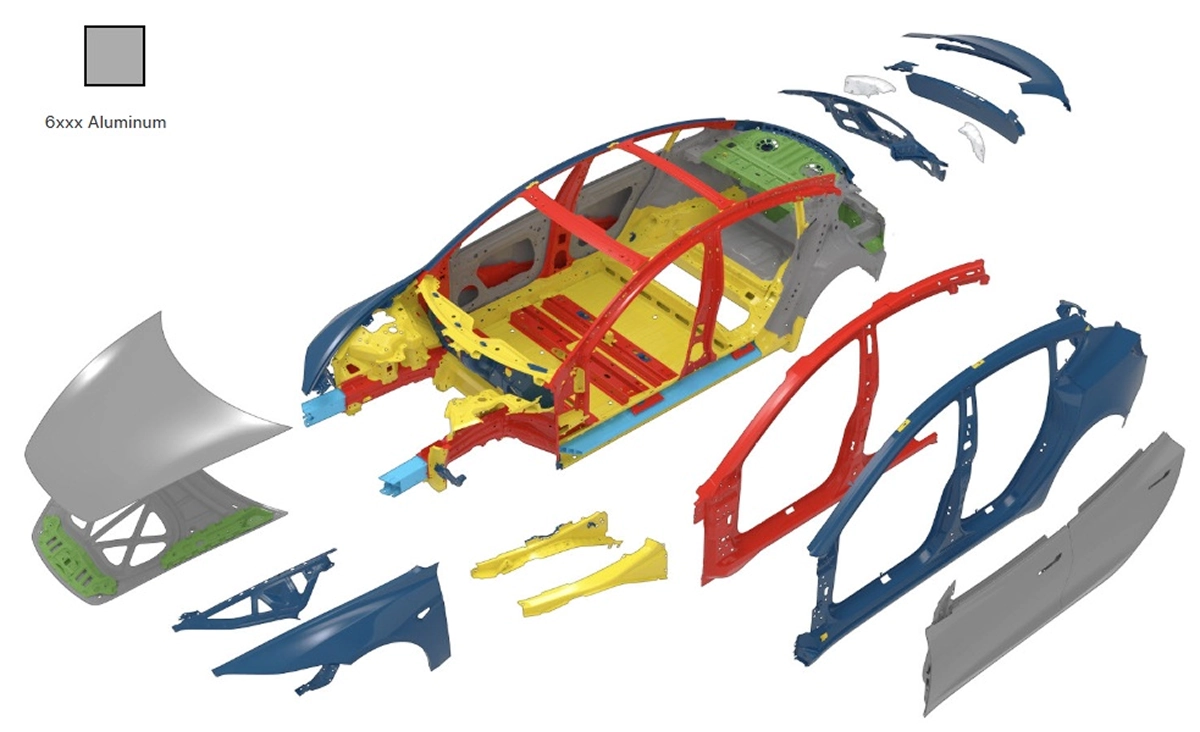
Ultra-high-strength steel is found in pillars, rockers, intrusion beams, and safety-critical zones.
UHSS is never repaired, never heated, and never reshaped because any impact or kink means mandatory replacement per OEM guidelines. Heating UHSS ruins it because the extreme heat changes the metal’s grain structure, causing it to lose the ultra-high tensile strength it was engineered to have.
Aluminum (ALU)
Aluminum cannot touch steel tools due to galvanic corrosion, so it requires a dedicated aluminum work area, tools, and dust extraction.
Aluminum stretches easily, is prone to tearing, and has a much lower melting point than steel, so technicians are forced to apply much less heat than they would on a steel panel.
Technicians use slow, controlled pushing and pulling to restore aluminum panels, but perfect contour is harder to achieve due to stretch.
When Body Panels Have to Be Replaced
Some body panel damage is too severe for repair and requires full replacement.
Replacement is needed when the panel has extensive tearing, severe crumpling that can’t be reshaped, structural damage to mounting points, or when the metal is ultra-high-strength steel, like in a safety zone.
The replacement process and cost depend on whether the panel is bolted on or welded to the vehicle.
Bolted Panels (Easier and Faster to Replace)
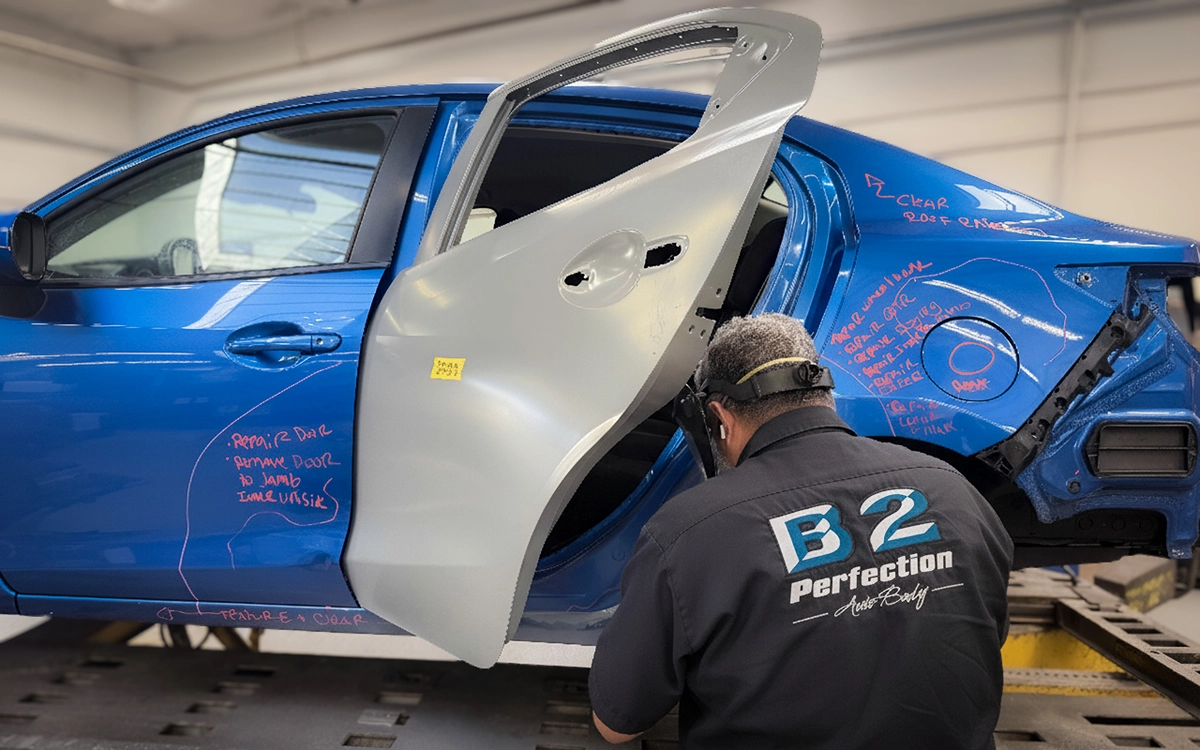
Bolted panels are attached with bolts and can be unbolted, removed, and replaced without cutting or welding.
Common bolted panels include:
Fenders – the body panel above the front wheels on each side
Doors – the front and rear side door
Hoods – the front body panel covering the engine
Trunk lids – the rear body panel that opens for trunk access
Bolted body panel replacement typically takes 3 to 5 days.
The old panel is removed and the new panel is painted. The adjacent panels surrounding that replacement panel are often de-trimmed. This is because the paint needs to be blended from new panel paint to old adjacent panel paint for a perfect color match due to the paint’s “flop.” A paint’s “flop” is how a color looks different from different angles, especially on metallic or pearl finishes.
Then the new panel is aligned and bolted into place.
Welded and Bonded Panels (More Complex and Expensive to Replace)
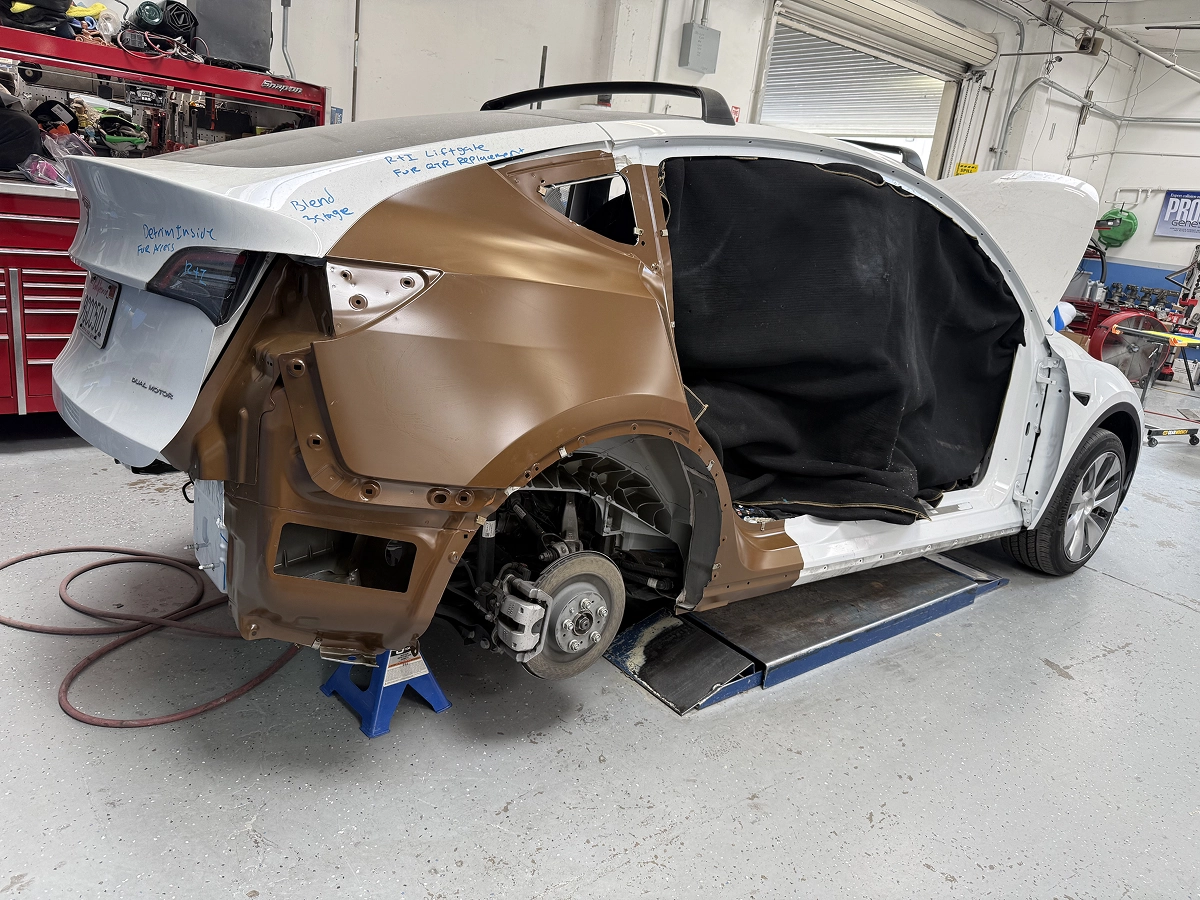
Welded and Bonded panels are permanently attached to the vehicle’s structure and require cutting out the old panel, welding or bonding in a new one, and sealing all seams.
Common welded panels include:
Quarter panels – the rear side body panels behind the rear doors (often mistakenly called fenders)
Roof panels – the top of the vehicle
Pillars – the vertical pillars that you see when the doors are open (A-pillar by windshield, B-pillar between front and rear doors, C-pillar is what the rear door closes onto)
Rockers – the panels running along the bottom of the car, where your feet might hit as you get in and out of the car
Welded or bonded panel replacement typically takes 7 to 14+ days.
Welded or bonded panel replacement takes much longer because technicians must carefully cut away the damaged panel and weld in the new panel using
OEM-approved welds such as the common spot weld or MIG weld techniques or bond them with OEM-approved glues. Then they apply various corrosion protections such as cavity wax to prevent future rust, and paint and often blend adjacent panels.
Welded and/or bonded panels always cost more due to the increased labor time, precision welding, and factory corrosion protection procedures required.
What Does Body Panel Repair Cost in Sunnyvale?
Body panel repair costs in Sunnyvale vary widely based on panel location, material type, damage severity, and whether the panel is bolted or welded.
The repair method and price depend on whether the damage is a simple ding, a dent with paint damage, or severe enough to require panel replacement.
Paintless Dent Repair (PDR) – The Most Affordable Option
Dings where the paint is not disturbed and is not on the very edges of a body panel can often be fixed with paintless dent repair, or PDR for short.
This is a minimally invasive repair technique where the dent is massaged out or glue-pulled without any painting.
PDR is typically the cheapest option and ranges from $100 to $750 depending on ding severity and quantity.
How good it looks after can range typically from 75% to 100% better.
Body Panel Repair with Bodywork and Paint
Body panel repair that involves bodywork happens when there’s a large dent or when there’s a dent that includes paint damage.
If the paint is damaged, the whole panel has to be repainted, and sometimes the ones next to it because of paint “flop.” The time a body technician spends fixing the dent is about the same as paintless dent repair (PDR), so you might as well have the body technician do it for a perfect result.
The components involved in body panel repair work include:
Detrimming the
body panel
$200-$300
Repairing the dent
$100-$500
Painting the body panel
$450-$700
The cost can vary widely because of the dent severity, access, contours, and material of the body panel. Also, repairing a dent often forces a paint blend into adjacent panels, which also must be de-trimmed and prepped for paint blending.
If it can all be contained to one panel, the costs vary from $750 to $1,500.
If it forces a blend into the adjacent panels, it can range typically from $1,250 to $2,000.
Bolted Panel Replacement
For bolted panels, the equation is similar to body repair, but you’re replacing the entire panel instead of fixing the dent.
The components include:
Detrimming the
body panel
$200-$300
Cost of replacement part
$350-$800
Painting the body panel
$450-$700
If it can all be contained to one panel, the costs vary from $1,000 to $1,800.
If it forces a blend into the adjacent panels, it can range typically from $1,500 to $2,300.
Welded or Bonded Panel Replacement
For welded or Bonded panels, the costs go up a noticeable amount, and you should heavily consider insurance even if there’s a rate increase, as the rate increase typically will not exceed the cost of repair.
Welded panel replacement involves cutting away the old panel, precision welding the new panel using OEM-approved spot welds or MIG welds, applying corrosion protections like cavity wax, and painting and blending the affected area.
The components include:
Detrimming the body panels
$750-$1,500
Cost of replacement part
$450-$1,000
Labor of the replacement part
$2,500-$4,500
Painting and blending the affected
area of the vehicle
$1,350-$3,000
It always forces a blend into adjacent panels due to welding burn and also due to the paint’s “flop,” so it can range typically from $5,000 to $10,000+.
We provide transparent estimates that break down labor, materials, and paint so you understand exactly what you’re paying for and can compare repair versus replacement options.
Insurance Covers Body Panel Damage (When the Claim Is Legit)
Drivers filing claims after side-impact collisions, parking lot damage, or hit-and-runs can use insurance to pay for body panel damage.
We find it advisable to use insurance whenever you’re not at fault as your insurance rates aren’t affected in California.
If you are at fault, filing a claim makes financial sense when repairs exceed around $2,500, the point where a possible rate increase typically wouldn’t be worth paying out of pocket.
Here's what you need to know:
We work with all insurance companies daily
Farmers/Zurich, Nationwide, USAA, Liberty Mutual are just a few examples
Our team includes former insurance adjusters who understand how claims work
Insurers sometimes push for aftermarket or used body panels, but we excel at getting dealerships to price match so you receive brand new OEM body panels when replacement is required.
We can guide you on whether filing makes financial sense based on your deductible and repair cost.
The choice is always yours.
Frequently Asked Questions About Body Panel Repair in Sunnyvale
Properly repaired body panels using OEM procedures and quality paint do not negatively affect resale value when the work is done correctly. However, if someone finds out the car has sustained damage, even if perfectly repaired, that could affect their attitude towards the vehicle and possibly affect the value. Poor repairs using aftermarket panels, mismatched paint, or shortcuts can lower resale value. We use OEM-approved repair methods, factory-spec welding, and professional paint matching to maintain your vehicle’s value and provide a lifetime warranty on all work. We do not report to CARFAX. Our lifetime guarantee also covers you for your lease returns.
Most car panels can be repaired including fenders, doors, hoods, trunk lids, and quarter panels. Bolted panels like fenders and doors are easier to repair or replace. Welded panels like quarter panels, pillars, and rockers are more complex but can be repaired depending on damage severity. Ultra-high-strength steel (UHSS) panels often found in safety zones must always be replaced and cannot be repaired.
Body panel repair includes using metalworking techniques like hammer-and-dolly, dent pullers, and heat shrinking to restore the panel’s original contour, applying filler to smooth imperfections, priming and sealing the surface, and painting and blending to match your vehicle’s factory finish. Welded panel replacement also includes precision welding and cavity wax application for corrosion protection.
Yes, body panel repair is covered by insurance when you file a legitimate claim after a collision, parking lot incident, or hit-and-run. We find it advisable to use insurance whenever you’re not at fault as your rates aren’t affected in California. If you are at fault, filing a claim makes financial sense when repairs exceed around $2,500.
Body panel repair costs in Sunnyvale range from $100 to $750 for paintless dent repair (PDR), $750 to $2,000 for body panel repair with paint, $1,000 to $2,300 for bolted panel replacement, and $5,000 to $10,000+ for welded panel replacement. The final cost depends on damage severity, material type, panel location, and whether paint blending into adjacent panels is required.
Paintless dent repair (PDR) typically takes 1 to 3 hours for small dings. Body panel repair with paint takes 3 to 5 days for minor to moderate damage. Bolted panel replacement also takes 3 to 5 days unless there’s a part delay, while welded panel replacement takes 7 to 14+ days due to cutting, precision welding, corrosion protection, and paint curing times.
No, repairing a panel using OEM-approved methods does not weaken the vehicle. Mild steel, aluminum, and sometimes even high-strength steel panels can be restored to factory strength when repaired correctly. Ultra-high-strength steel (UHSS) panels must be replaced rather than repaired to maintain structural integrity. We follow manufacturer guidelines and use proper welding techniques, corrosion protection, and structural reinforcements to ensure safety.
Small, shallow dents where the paint is not damaged can sometimes be popped out using suction cups or hot water methods as seen on YouTube. However, this very rarely works in reality, especially on metal panels. Paintless dent repair (PDR) by a trained technician costs $100 to $750 and delivers 75% to 100% improvement without risking paint damage or making the dent worse. DIY attempts on dents or painted areas can crack the paint, make the damage bigger, and increase repair costs.
Yes, most car panels can be repaired if the damage is not too severe. Mild steel panels with dents and dings are highly repairable using hammer-and-dolly techniques, dent pullers, and heat shrinking. High-strength steel (HSS) panels can sometimes be repaired but have limited reshaping ability. Ultra-high-strength steel (UHSS) panels often found in safety zones must always be replaced and cannot be repaired per OEM guidelines. Aluminum panels can also be repaired, but only in a dedicated aluminum work area using gentler techniques because they stretch and tear more easily than steel











We Serve Mountain View, Santa Clara, and Silicon Valley Communities
We’re located in Sunnyvale on Wolfe and Kifer, next to Taco Belland Apple (Wolfe Campus), and serve drivers throughout Silicon Valley.
Most customers reach us in roughly 20 minutes using Highway 85, Highway 280, and Highway 237.
Sunnyvale
Los Altos
Mountain View
Saratoga
Santa Clara
Campbell
Cupertino
Milpitas
San Jose
We offer free pick-up and drop-off so your body panel repair stays convenient no matter where you’re coming from.
Whether you’re dealing with parking lot damage near the Googleplex in Mountain View or collision damage from commuting through
San Jose, we handle bumper repairs and replacements with OEM-quality standards and a lifetime warranty.
What our client’s are saying
3 Iron Clad Guarantees
Lifetime Workmanship Guarantee
Own it? Lifetime repair warranty.
Lease it? Guaranteed clean lease return or we fix it freeFlawless Finish Guarantee
If the paint match isn’t correct, we fix it free
Claim Vs Out-of-Pocket Guarantee
We help you decide claim vs. out-of-pocket, or escalate it to a insurance-experienced manager
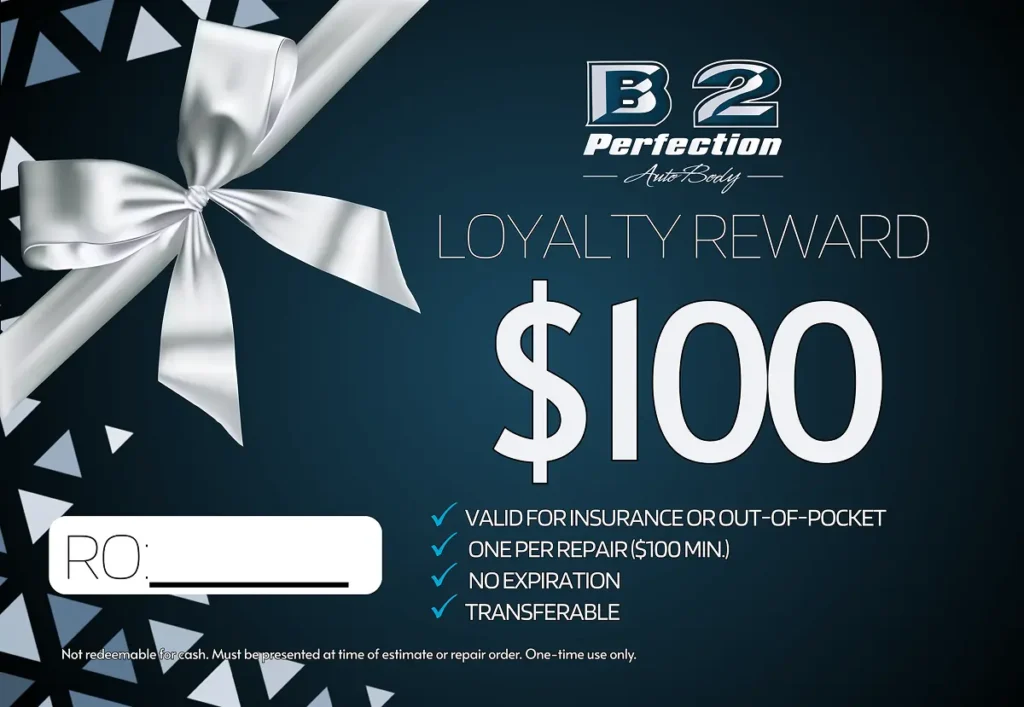
Every Lifetime Guarantee Repair Comes With a $100 Reward For Future Repairs!
Customer Pay Repairs
20% Off Labor For Out-of-Pocket Repairs
Limited Time Offer
Offer ends:
Get high-quality repairs done right the first time. Claim your savings today and enjoy a smooth, hassle-free repair from start to finish.
Come Visit Us